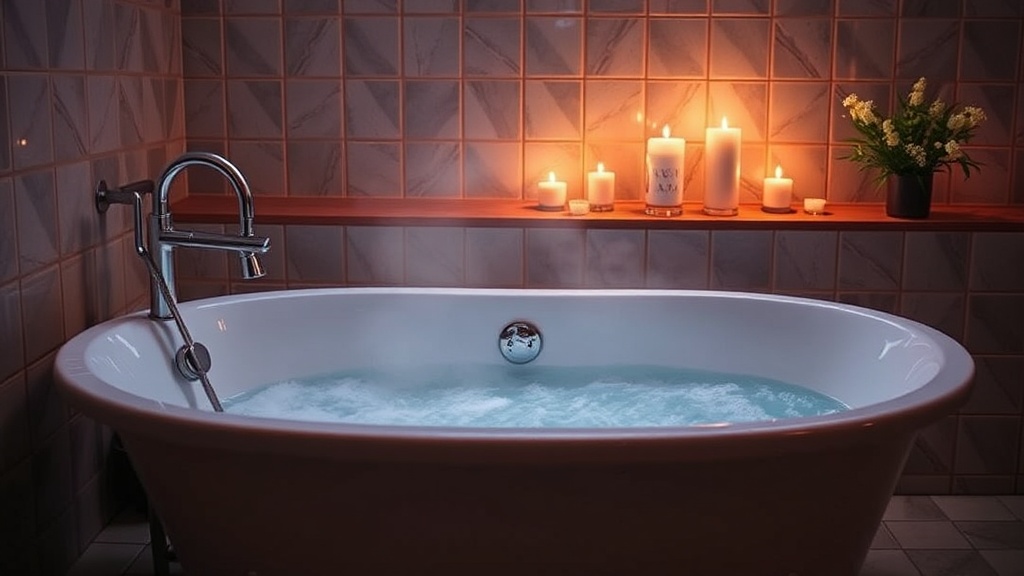
Can a Thoughtful Bath Ritual Actually Transform Your Entire Evening?

You step across cool tile at 7:47 PM—still carrying the residue of back-to-back meetings, traffic noise, and that email you probably shouldn't have sent. The bathroom door clicks shut. Outside, the world continues its frantic pace. Inside, something shifts. Within twenty minutes, your shoulders drop, your breathing slows, and the evening ahead suddenly feels manageable again. This isn't magic—it's the deliberate construction of a bath ritual that actually works.
Most people treat bathing as functional hygiene: hot water, soap, done. But there's a significant difference between a quick scrub and a restorative immersion that recalibrates your nervous system. The distinction lies in environmental curation, sensory sequencing, and the intentional separation from digital demands. When executed thoughtfully, a bath becomes a transitional ritual—marking the boundary between professional demands and personal restoration.
What temperature and duration create genuine physical relaxation?
Your body responds to water temperature with surprising specificity. Too hot—and you'll exit feeling drained rather than refreshed, your cardiovascular system working overtime. Too cool—and the vasoconstriction keeps muscles tense rather than releasing them. The Sleep Foundation's research on pre-sleep bathing indicates that water between 92 and 100°F triggers the optimal physiological response: warm enough to dilate blood vessels and release muscle tension, moderate enough to prevent the dehydration and dizziness that accompany prolonged exposure to high temperatures.
Duration matters equally. Fifteen to twenty minutes provides sufficient time for magnesium absorption (if you're using epsom salts) and complete muscle relaxation without the pruned-skin, lightheaded aftermath of marathon soaking. Set a gentle timer if needed—part of luxury is not having to monitor the clock yourself.
Consider thermal contrast as part of your ritual's conclusion. A brief cool rinse before exiting—not shocking, just noticeably cooler than your bath—stimulates circulation and provides an energizing transition that prevents the post-bath grogginess that can derail your evening plans.
Which sensory elements actually contribute to mental decompression?
Your olfactory system has direct pathways to the limbic brain—specifically the amygdala and hippocampus, which process emotion and memory. This neurological shortcut means scent bypasses rational analysis and triggers immediate physiological responses. Lavender has documented anxiolytic properties. Sandalwood grounds racing thoughts. Bergamot offers subtle uplift without the stimulating edge of citrus. The key isn't following trends—it's identifying which scent profile consistently signals safety to your particular nervous system.
But smell is only one channel. Tactile experience matters tremendously. The transition from bath to drying shouldn't involve a threadbare towel that scratches and disappoints. Invest in Turkish cotton or linen towels with substantial weight—400 to 600 GSM—that envelop rather than abrade. Keep a soft robe within arm's reach so you're not darting across cold floors. These aren't indulgences; they're environmental cues that your comfort matters.
Sound completes the sensory triad. The bathroom's hard surfaces create challenging acoustics, amplifying harsh frequencies. A small waterproof speaker playing ambient soundscapes—rain, gentle instrumental music, or binaural beats at 432 Hz—masks household noise and creates auditory boundaries. The Harvard Health research on relaxation response demonstrates how consistent auditory environments signal the parasympathetic nervous system to engage, lowering cortisol levels measurably.
How do you prevent digital intrusion from destroying the experience?
The hardest part of creating a meaningful bath ritual isn't selecting products—it's protecting the space from digital contamination. Your phone doesn't belong in the bathroom during this time. Not for "just checking" the weather. Not for scrolling while the tub fills. The presence of a connected device maintains your nervous system in a state of anticipatory arousal—waiting for notifications, half-attached to external demands.
Create a deliberate transition: silence your device, leave it charging in another room, or—radically—power it down entirely. This physical separation creates psychological space. You're communicating to yourself (and others, implicitly) that these twenty minutes are non-negotiable. The world will continue rotating without your immediate attention.
If you're concerned about emergencies, establish a specific signal—perhaps a landline call or a knock on the bathroom door—for genuine urgencies. Everything else can wait. This boundary-setting is a skill that transfers to other areas of life, teaching your nervous system that rest isn't something you squeeze in between obligations but something you protect deliberately.
Product selection without the overwhelm
The wellness industry has complicated bathing unnecessarily. You don't need twelve products arranged in aesthetic rows. Start with three quality items: a gentle, pH-balanced cleanser that doesn't strip natural oils; a mineral-rich soak (magnesium chloride absorbs more efficiently than traditional epsom salts); and a body oil or lotion for immediate post-bath application while skin remains slightly damp.
Consider the source of your products. Small-batch formulations often contain fewer preservatives and more bioavailable ingredients than mass-market alternatives. Look for packaging in glass or aluminum rather than plastic—both for environmental considerations and because these materials don't leach into product formulations over time.
The bath pillow debate deserves mention. Some people find them essential for neck support during longer soaks; others find them awkward and prefer rolled towels. Test both approaches. Comfort is personal, and no influencer's recommendation replaces your body's direct feedback.
Timing your ritual for maximum benefit
Research published in Science Advances indicates that bathing one to two hours before bed significantly improves sleep quality by facilitating the body's natural temperature drop that precedes sleep onset. However, evening isn't the only viable window. A morning bath—particularly with invigorating scents like rosemary or eucalyptus—can serve as a gentle transition into professional mode for those who work from home. Weekend afternoon baths offer guilt-free restoration without the pressure of impending bedtime.
The consistency of timing matters less than the consistency of intention. A weekly ritual done with full attention outperforms daily rushed baths that become another item on your to-do list. Start with once or twice weekly—protected, uninterrupted, fully present.
Why does the transition out of the bath matter as much as the bath itself?
Most people sabotage their relaxation the moment they pull the drain. Harsh overhead lighting, rushed drying, immediate phone-checking—these destroy the parasympathetic state you've carefully cultivated. Extend your ritual through the transition: dry slowly, apply skincare deliberately, dress in comfortable fabrics. This isn't wasted time; it's the completion of a cycle.
Consider what follows. If you're bathing before bed, move directly to your bedroom—don't detour through emails or television. If you're transitioning to evening activities, allow a brief buffer: herbal tea, light stretching, or quiet reading. The goal isn't to prolong the bath indefinitely but to carry its effects forward rather than immediately subjecting yourself to reactivation.
The bathroom you're creating isn't merely functional infrastructure—it's a declaration that restoration deserves architectural priority. When you invest in this space (and the time spent within it), you're practicing a fundamental truth: sustainable performance requires genuine recovery. Not the performative self-care of social media, but the private, unglamorous work of maintaining your own wellbeing.