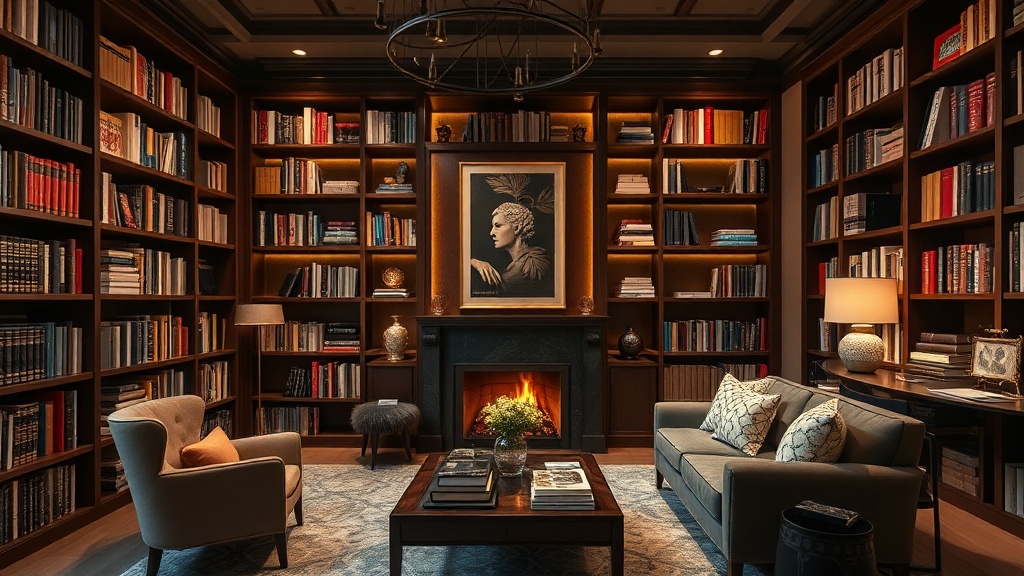
Setting Up a Sophisticated Home Library

Why Most Home Libraries Fail to Feel Sophisticated
Most people assume that a home library requires a massive budget and floor-to-ceiling mahogany shelves. They think it's about the sheer volume of books or the price of the wood. That's a mistake. A truly refined reading space is about the curation of light, the texture of the seating, and the intentionality of the layout. It isn't a storage problem; it's a sensory experience. If you treat it like a storage unit, it will feel like a warehouse. If you treat it like a sanctuary, it becomes the most valuable room in your house.
A well-designed library serves as a mental reset. It's a place where the outside world disappears. To achieve this, you have to look beyond the bookshelves. You need to consider how the room breathes, how the light hits the spine of a book, and how the chair supports your posture during a long afternoon of reading. This guide focuses on the practical steps to building a space that feels lived-in yet impeccably polished.
How do I select the right shelving for my space?
Shelving is the backbone of your library, but it shouldn't be an afterthought. When choosing, look for materials that offer weight and permanence. Metal, solid wood, or even stone-finished surfaces work well. Avoid the flimsy, particle-board options that often look cheap and feel unstable. A heavy shelf suggests stability (both literal and metaphorical).
Consider the height of your ceilings. If you have high ceilings, you might want to use a rolling ladder—not just because it looks classic, but because it makes the upper reaches functional. If your ceilings are standard, focus on a mid-height arrangement that allows the walls to breathe. You don't want to feel trapped by your books. A little bit of "negative space" (the empty area between books) actually makes the collection look more expensive and less cluttered.
When arranging, don't just line up every book by height. Mix in objects like small sculptures, a vintage clock, or a piece of ceramic art. This breaks up the visual rhythm and prevents the room from feeling like a sterile office. You can find inspiration for architectural details at Architectural Digest, which often showcases how libraries integrate with modern living spaces.
Can I create a library in a small room?
Absolutely. You don't need a dedicated wing of a mansion to have a library. In smaller apartments or bedrooms, the key is verticality and lighting. Use the corners of the room. A single, well-placed bookshelf paired with a high-quality reading lamp can transform a corner into a library.
The trick is to choose a cohesive color palette. If your books are a chaotic mix of bright covers, consider a uniform way to present them. Some collectors use book jackets or even turn the spines inward (though that's a polarizing choice) to create a more muted, neutral aesthetic. For those interested in the physics of light and how it affects interior-designed spaces, the Dwell archives offer wonderful insights into small-scale spatial design.
The lighting in a small library is even more critical than in a large one. You need layers. A single overhead light is too harsh and creates shadows that make the room feel small. Instead, use a combination of:
- Task Lighting: A dedicated lamp next to your chair.
- Accent Lighting: Small lights that highlight the books themselves.
- Ambient Lighting: Soft, indirect light that fills the room without being direct.
What kind of furniture makes a reading nook functional?
The chair is the most important piece of furniture in the room. If the chair is uncomfortable, you won't use the space. Don't settle for a standard armchair; look for something with specific ergonomic support. A leather wingback chair is a classic for a reason—it provides a sense of enclosure and comfort. However, a modern linen-wrapped lounge chair can feel much more contemporary and less "stuffy."
Think about the textures you are introducing. If your shelves are hard wood and metal, you need soft textiles to balance the room. A velvet ottoman, a wool throw, or a thick silk rug will add the necessary warmth. A library should feel soft to the touch, not just the eyes. This is where the "lifestyle" aspect of the room comes alive. It's about how the room feels against your skin as much as how it looks in a photograph.
A small side table is also a necessity. It shouldn't just be for a cup of tea; it's for your glasses, your phone, or a small reading journal. A heavy marble top or a dark wood surface adds to the sense of permanence. It's these small, tactile details that separate a functional room from a curated one. If you're looking for high-end furniture-making techniques, studying historical furniture styles can help you identify quality pieces when you're out shopping.
How often should I update my collection?
A library is a living thing. It shouldn't be a static museum of books you bought a decade ago. As your interests change, your library should reflect that. This doesn't mean you need to buy a new shelf of books every month, but you should rotate your displays. Moving a certain set of books to a different shelf or swapping a book for a piece of art keeps the room feeling fresh.
The goal is to avoid the "stagnant" feeling that comes with over-decorating. If a space feels too full, it can become claustrophobic. Periodically, go through your shelves and decide what still speaks to you. If a book no longer resonates, perhaps it's time to donate it and make room for something new. This keeps the collection intentional. A curated collection is always more impressive than a massive, unorganized one. It shows that every item in the room was chosen with a specific purpose in mind.