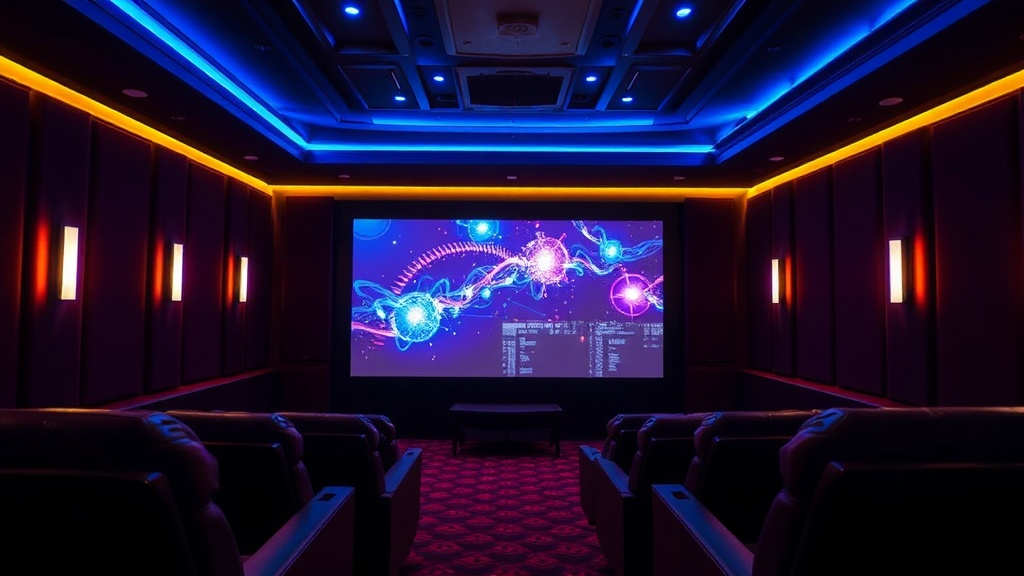
Curating a High-End Private Cinema Experience

This guide covers the technical requirements, aesthetic considerations, and hardware selections necessary to build a professional-grade private cinema in a residential setting. You'll find specific advice on audiovisual calibration, acoustic treatments, and seating ergonomics to ensure your home theater delivers a theater-quality experience.
What Equipment Do I Need for a Home Cinema?
A high-end home cinema requires a synchronized system of a high-lumen projector (or a massive OLED display), a dedicated multichannel surround sound system, and calibrated acoustic treatments. It isn't just about buying the biggest screen; it's about the synergy between light, sound, and space.
Most people start with the visual component. If you have a dedicated room with no ambient light, a high-end projector is the way to go. I often suggest looking at the Sony Bravia projector series for their color accuracy and brightness. However, if your room has windows or significant light leakage, a large-format OLED TV might actually serve you better. A 98-inch Sony Bravia XR OLED provides a level of contrast that even the best projectors struggle to match in a bright room.
Sound is actually more important than the image for immersion. You can have a 4K image, but if your audio is thin, the experience feels cheap. You need a dedicated receiver to drive your speakers. I'm a big fan of the Sonos ecosystem for simplicity, but for true high-fidelity, you'll want a discrete setup with a dedicated AV receiver from a brand like Denon or Marantz.
The setup should include:
- The Display: A 4K or 8K laser projector or a large-scale OLED.
- Audio Core: A dedicated AV receiver and a multi-channel speaker array (5.1.2 or 7.1.4 is the standard for Atmos).
- Subwoofer: At least one high-performance subwoofer to handle low-frequency effects.
- Source: A high-bitrate player like a Magnetar or a high-end streaming device.
Don't forget the cables. Using cheap HDMI cables for a high-end setup is a mistake. It's like putting low-grade fuel in a Ferrari. Use certified high-speed cables to ensure your signal doesn't drop or flicker during peak brightness moments.
How Do I Optimize Room Acoustics?
Optimizing room acoustics involves a combination of sound absorption, diffusion, and bass management to eliminate echoes and standing waves. You can't just throw a rug on the floor and call it a day—that's a recipe for a muddy soundscape.
The biggest issue in home theaters is "flutter echo." This happens when sound bounces between hard, parallel surfaces (like your walls). To fix this, you need to introduce soft materials. But be careful—you don't want the room to feel "dead." A dead room sounds unnatural. You want a balanced environment.
Here is a quick breakdown of the three main types of treatments:
| Treatment Type | Primary Function | Best For... |
|---|---|---|
| Absorption | Soaks up mid and high frequencies | Reducing echo and harshness |
| Diffusion | Scatters sound waves in many directions | Maintaining a "live" but controlled feel |
| Bass Traps | Manages low-frequency buildup in corners | Fixing "boomy" or muddy bass issues |
I've seen too many people spend $20,000 on speakers and then put them in a room with bare drywall and hardwood floors. It's a waste. If you're building this in a room that's already finished, look into acoustic panels from brands like Vicoustic. They actually look quite stylish—they don't have to look like a recording studio. They can be integrated into your design as art pieces.
If you're still in the planning phase, you might be thinking about how this room fits into your wider home layout. If you've already spent time setting up a sophisticated home library, you'll find that the principles of quiet, controlled environments are very similar.
How Much Does a High-End Home Cinema Cost?
A professional-grade home cinema can cost anywhere from $30,000 to well over $250,000, depending on the level of hardware and the complexity of the installation. The wide price range exists because you aren't just buying gadgets; you're buying a customized architectural experience.
Let's look at three tiers of investment:
- The Enthusiast Tier ($15,000 - $40,000): This includes a high-quality 4K projector, a decent 5.1 surround system, and basic acoustic panels. It's great, but it won't blow your mind every single time.
- The Prosumer Tier ($50,000 - $100,000): This is where things get serious. You're looking at a dedicated Atmos setup (7.1.4), a much better projector, and professional calibration. This is the level where the room starts feeling like a real theater.
- The Ultra-Luxury Tier ($150,000+): This is a custom-built environment. We're talking about custom-engineered seating, high-end architectural lighting, and a system that is professionally tuned by an acoustic engineer.
It's easy to get lost in the numbers. But remember, the most expensive part isn't usually the screen—it's the labor. Professional calibration and installation are what make the difference between a "big TV in a dark room" and a true cinema. A professional will ensure your subwofer isn't rattling the windows in a way that's distracting, but rather providing a deep, controlled thump.
One thing to keep in mind: don't skimp on the seating. If you're going to be sitting for a three-hour epic, you need ergonomic support. I've seen people build incredible tech setups only to realize their chairs are uncomfortable after forty minutes. Look at brands like Jacuzzi for luxury relaxation, but for cinema, you want specialized theater recliners with integrated power controls. Your lower back will thank you.
The lighting in the room is another often-overlooked variable. You want dimmable, recessed lighting that can transition from a "warm welcome" to a "total blackout" mode. If your lighting is too bright or too harsh, it will ruin the contrast of your screen. This is a perfect example of how a home cinema integrates with your broader lifestyle habits, much like a thoughtful evening wind-down routine. The lighting sets the mood before the first frame even plays.
The design of the room should also consider the "darkness" of the walls. If you use a white or light-colored paint on the walls surrounding the screen, the light from the screen will bounce back and wash out the image. Use dark, matte colors—navy, deep charcoal, or even forest green—to keep the focus on the content. This is a simple trick that makes a massive difference in perceived contrast.
Building a private cinema is a massive undertaking. It requires a balance of technical precision and aesthetic design. Whether you're investing a few thousand or a few hundred thousand, the goal is the same: total immersion. It's about creating a space where the outside world disappears the moment the lights go down.